Are you torn between the appeal of a brand-new home and the charm of an established one in Colleyville? You are not alone. In a market where both options can offer generous lot sizes, luxury finishes, and strong long-term appeal, the right choice often comes down to how you want to live, how soon you need to move, and how much control you want over the final product. Let’s dive in.
Colleyville has a distinct housing profile
Colleyville is not a high-density, production-build market. The city’s long-term planning framework emphasizes large lots, natural settings, and neighborhood character, with a maximum density of 1.8 dwelling units per net acre.
That matters because it shapes what you will actually find when comparing new construction and established homes. In Colleyville, even newer homes are often custom or estate-oriented rather than part of a dense tract development.
What new construction means here
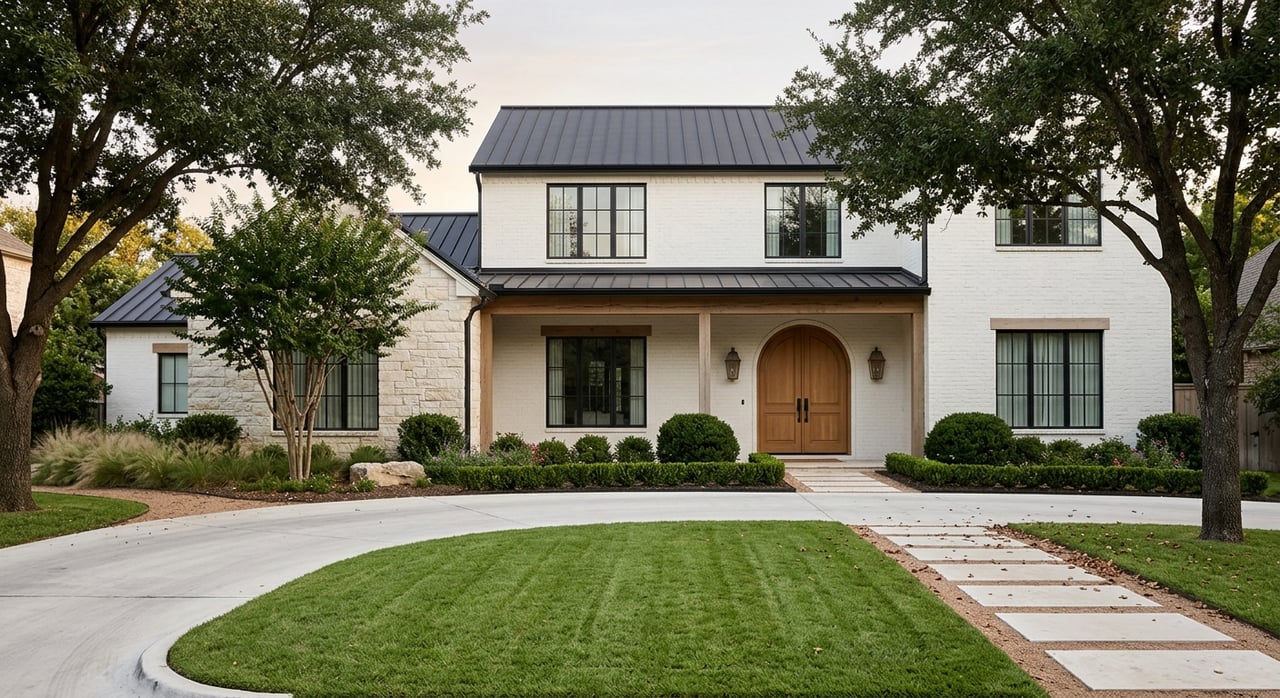
If you picture new construction as rows of similar homes on small lots, Colleyville will likely feel different. Current projects and community examples point more toward gated enclaves, estate lots, wooded homesites, and design-build opportunities.
That gives you a different kind of decision to make. Instead of simply choosing “old versus new,” you are often choosing between a newly built custom home and an existing luxury property with its own history and setting.
New homes often focus on customization
One of the biggest reasons buyers choose new construction in Colleyville is design control. In several current communities, buyers may have the option to choose the lot, influence the floor plan, select finishes, and shape the overall feel of the home.
For example, Oak Alley is described as a 34-lot gated community on 43 acres, with lots from 0.5 to 1.5 acres, homes from $4 million, and a minimum home size of 4,300 square feet. Preston Manor Custom Series is marketed as fully customizable, with homes starting at 3,500 square feet and 3+ car garage options.
New communities still offer space
A common assumption is that newer homes mean smaller lots. In Colleyville, that is not always true.
Holt Farms is described as having 10 private estate lots averaging more than 44,000 square feet. The Bluffs at Colleyville is marketed as a gated development with nine one-plus-acre homesites, while The Overlook includes homesites from 13,000 to 20,000 square feet and highlights creek-side privacy and greenbelt space.
New construction can include HOA costs
If you are comparing monthly and annual ownership costs, HOA dues should be part of the discussion. Some current Colleyville new communities advertise HOA fees such as $2,500 per year at Preston Manor and about $3,300 per year at Oak Alley.
That does not make new construction better or worse. It simply means your side-by-side comparison should include more than just the purchase price.
Why new construction may take longer
The timeline is often where buyers feel the biggest difference. A resale purchase usually follows a more direct path to closing, while a new build may involve lot selection, design choices, construction, and city review steps.
In Colleyville, the city notes that most new homes require an Urban Forestry Review. That process can include a tree survey, an urban forestry plan, and in some cases a tree removal permit.
The city also requires sidewalk construction or escrow for new single-family permits. It further notes that new single-family permits require full gas and water calculation sheets.
In practical terms, your timeline is not just about building the house. It may also involve approvals tied to trees, infrastructure, and site conditions.
Some projects may still be in early phases
Another timing factor is the development stage of the community itself. Some Colleyville projects have been marketed in reservation, infrastructure, or pre-construction phases.
That can mean a longer lead time than you might expect from a standard resale transaction. If your move is tied to a job relocation, a lease ending, or a specific personal timeline, this part of the decision matters a lot.
What established homes offer in Colleyville
Established homes bring a different set of strengths. In many cases, they offer mature landscaping, settled streetscapes, and a more finished neighborhood feel from day one.
That can be especially meaningful in Colleyville, where the city places a strong emphasis on preserving trees, natural settings, and neighborhood character. The city identifies itself within the Eastern Cross Timbers region and notes the continued presence of many post oak and blackjack oak trees.
Mature trees and setting can be a major advantage
If you value shade, canopy, and a lot that feels established, an existing home may stand out right away. Colleyville’s urban forestry approach reflects a long-term balance between conservation, redevelopment, and property use.
The result is that many established homes sit in environments that feel rooted and complete. For some buyers, that is hard to replicate, even with a beautifully designed new build.
Established homes can still feel spacious
Older does not necessarily mean smaller in Colleyville. Existing homes here can still offer substantial square footage and generous lots.
For example, one Mill Creek home built in 1991 shows 4,623 square feet on about 0.35 acres. A Woods of Colleyville home built in 1999 shows 4,162 square feet on about 0.54 acres.
These examples do not define the full market, but they do show that established homes can provide plenty of room. In Colleyville, lot size alone often does not separate old from new.
Architectural style may vary more
One area where established homes often differ most is design character. Newer communities may follow tighter architectural guidelines and present a more cohesive look across the neighborhood.
Established homes tend to reflect the design choices of the time when they were built, along with renovations and updates made over the years. If you enjoy personality and variety, that may be a plus. If you want a more unified aesthetic and a fresh start, new construction may feel more appealing.
How to choose the right fit
In Colleyville, the decision usually comes down to four practical filters: customization, neighborhood feel, timing, and total cost. When you view homes through those lenses, the right answer often becomes much clearer.
Here is a simple way to think about it.
Choose new construction if you want control
New construction is often the stronger fit if you want to shape the home around your preferences. That can include the homesite, floor plan, exterior style, finishes, garage setup, and overall flow.
If your priority is getting exactly what you want and you have the patience for the process, a custom or semi-custom build may be worth the longer timeline.
Choose an established home if you want immediacy
An established home usually makes more sense if timing matters and you want to move into a finished neighborhood setting. You can walk the property, experience the street, and understand the home’s setting in real time.
That can make decision-making easier, especially if you are relocating to Colleyville from outside the area.
Compare total costs, not just list price
Colleyville sits firmly in an upper-price housing segment. As of March 2026, Redfin reported a median sale price of $1.0 million, Zillow reported an average home value of $917,464, and Realtor.com described Colleyville as a buyer’s market.
Those measures are not identical, but together they point to a market where thoughtful comparison and negotiation can matter. You will also want to factor in HOA fees where applicable, plus property tax differences tied to the specific address.
Remember that taxes and attendance areas are address-specific
In Colleyville, tax burden and school assignment are not one-size-fits-all. The city’s quick facts list the 2024 city tax rate at $0.260991 and show that school district tax rates vary among GCISD, Birdville ISD, HEB ISD, and Keller ISD.
GCISD also notes that attendance areas are based on the student’s residence address. That means two homes with similar prices may carry different tax and assignment details depending on where they sit.
A side-by-side view
| Priority | New Construction | Established Home |
|---|---|---|
| Design control | Higher | Lower |
| Move-in speed | Usually slower | Usually faster |
| Tree canopy and mature setting | Varies by lot | Often stronger |
| Neighborhood feel | Newly formed or phased | More settled |
| HOA costs | More common in current examples | Varies by property |
| Construction process | More steps and approvals | Fewer build-related steps |
The best Colleyville choice is personal
In many markets, the answer might be obvious. In Colleyville, it usually is not. Both new construction and established homes can deliver luxury, space, and long-term appeal.
The better choice is the one that matches your priorities. If you want a tailored home and are comfortable with a longer path, new construction may be the better fit. If you want mature trees, immediate availability, and a more settled setting, an established home may serve you better.
A thoughtful comparison can save you time, reduce stress, and help you buy with confidence. If you want expert guidance as you weigh your options in Colleyville, Calling DFW Home LLC can help you evaluate homes, neighborhoods, timing, and total cost with a local, tailored approach.
FAQs
What makes new construction in Colleyville different from other suburbs?
- New construction in Colleyville is often custom or estate-oriented, with larger lots, lower density, and more site-sensitive development than typical tract-home communities.
How long can a new construction home take in Colleyville?
- New construction timelines can be longer because the process may include lot development, design decisions, infrastructure work, Urban Forestry Review, and other city permit requirements.
Are established homes in Colleyville usually on smaller lots than new homes?
- Not necessarily. Colleyville has spacious existing homes and newer homes on generous lots, so lot size alone is usually not the best way to separate the two options.
What costs should buyers compare when choosing between new and established homes in Colleyville?
- You should compare purchase price, HOA dues if applicable, property taxes tied to the address, and any timeline-related carrying costs that may come with a longer build process.
Why does address matter so much for a Colleyville home search?
- Address matters because property tax rates can vary by district and attendance areas are based on the home’s location, which can affect your total ownership picture.
Is Colleyville more favorable for buyers or sellers right now?
- According to the research provided, Realtor.com described Colleyville as a buyer’s market, which suggests buyers may have some room to negotiate depending on the property and terms.