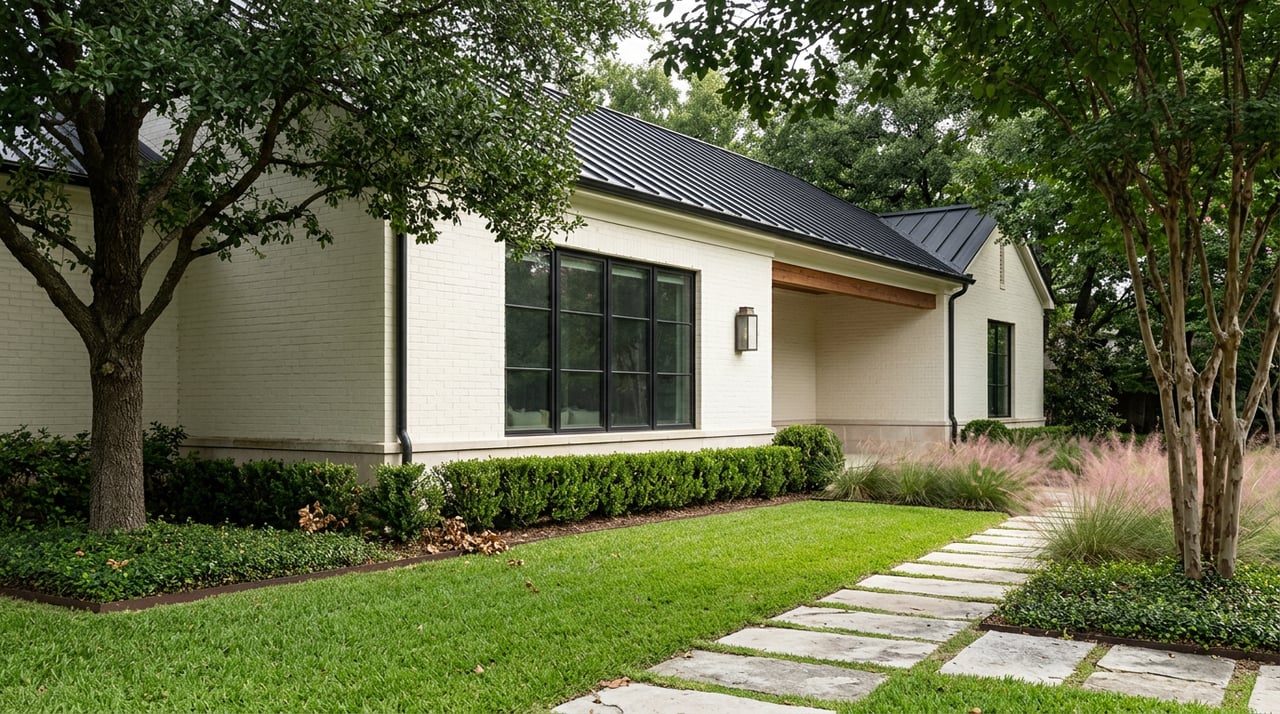
Pull up a listing for a property on Bill Simmons Road or in the Mitcham Acres Addition and you'll often see two utility lines sitting next to each other that seem to contradict themselves: City Sewer, City Water, and then, further down the same field, Well. Not a typo. Not a leftover from an old MLS template. A real, physical water well still sitting somewhere on the property, a holdover from the decades before Colleyville's municipal system reached these lots, and one that most current owners have never thought about, tested, or even located.
As of July 1, 2026, that forgotten well is no longer a curiosity. It's a disclosure obligation.
The Texas Real Estate Commission adopted a new standalone form on May 4, 2026, called the Water Notice: Seller's Disclosure About Groundwater and Surface Water Rights, and it became mandatory this summer. For most Texas home sales, this changes little. For sellers of Colleyville's larger and older lots, particularly along the acreage corridors where city utilities arrived after the wells were already drilled, it changes the paperwork in a way that catches people off guard, because the trigger isn't whether you use well water. It's whether a well exists at all, used or not.
What the form actually asks
The Water Notice requires sellers to disclose what they know about a property's groundwater and surface water, including any wells on the property, whether they're currently in use, and whether they've been registered with the applicable groundwater district. It also covers ponds, lakes, or water tanks, any surface water permits, and whether groundwater rights have ever been severed, sold, or leased separately from the land itself.
The exemption is narrow. A seller is only off the hook if every one of the following is true: no well on the property, in use or not; no pond, lake, or storage tank; no surface water permit; no groundwater rights that have been sold or leased away; and water sourced entirely from a city or utility. Miss any one of those conditions and the form travels with the sale.
That last clause is where a lot of Colleyville sellers assume they're clear. They're on the city system. They pay a Colleyville water bill every month. Why would a groundwater disclosure apply to them?
Because the form asks about the well's existence, not its use.
Why this lands differently in Colleyville than in most Texas suburbs
Most of the coverage around this new rule has focused on rural and Hill Country transactions, places like Dripping Springs and Wimberley where active well water is still the norm. That framing misses a quieter version of the same problem sitting in North Texas.
Colleyville's larger-lot neighborhoods, the Bill Simmons Road corridor, Riviera Estates, the Cheek-Sparger Road estates, and older acreage subdivisions like Mitcham Acres, were built out gradually as the city's water and sewer infrastructure expanded into what had been rural land. A homeowner who drilled a well in the 1980s or bought a property that already had one didn't necessarily cap it or remove it when city water arrived. It stayed on the tax record, stayed in the county's well registry if it was ever registered at all, and stayed physically on the property, sometimes capped, sometimes just abandoned in place.
None of that shows up when you're only checking whether the tap runs on city water. It shows up when a title search, a survey, or a buyer's inspector asks the question the new form now forces onto the table: is there a well here, and does anyone know its condition?
Properties on Bill Simmons Road aren't an edge case here. They're the pattern. Listings in that corridor and in neighboring acreage subdivisions routinely show a well alongside full city utilities, sometimes with a stocked pond as an additional feature. Under the new rule, that pond is its own independent trigger, separate from the well question entirely.
The stakes if you skip it
This isn't a box you can leave blank and hope nobody asks. If a seller doesn't deliver the Water Notice within the timeline the contract specifies, the buyer can terminate the contract outright and get their earnest money back. Even after the seller does deliver it, the buyer typically gets a short window, within seven days or before closing, whichever comes first, to walk away for any reason and still recover their earnest money.
That's a real cost. A Colleyville acreage sale that falls apart during option period over a well nobody disclosed doesn't just delay the closing. It resets the whole marketing clock, and it puts a documented disclosure gap into the property's history that the next buyer's agent will ask about too.
Where this stacks with the septic disclosure Colleyville acreage owners already know
For sellers on larger Colleyville lots, the Water Notice rarely arrives alone. Properties on acreage that predate city sewer expansion often still run septic systems, or did until relatively recently, and Texas already requires a separate form for that: TXR 1407, the Information About On-Site Sewer Facility disclosure. That form asks about the type of treatment system, whether it's conventional, aerobic, or a holding tank, along with age and maintenance history, and the seller fills it out personally rather than relying on an agent.
The two forms aren't redundant. A property can have a fully functioning septic system in current use and a completely separate, decades-old capped well that hasn't produced water since the Reagan administration. Both get disclosed. Both get asked about by a careful buyer's agent. And both are exactly the kind of paperwork that a seller who's lived in a home for twenty years has genuinely forgotten exists, because neither one affects daily life until the day someone is trying to buy the place.
The groundwater district piece most Tarrant County sellers don't know exists
If a well on a Colleyville property is still active, or if it's ever registered, it likely falls under the jurisdiction of the Northern Trinity Groundwater Conservation District, the entity the Texas Legislature created in 2007 specifically to manage, preserve, and regulate groundwater across Tarrant County. Wells that were drilled and used before the district's creation may or may not appear in its records depending on whether anyone filed the paperwork at the time. That gap between what physically exists on a property and what's formally on record with the district is precisely the kind of detail the new Water Notice is designed to surface, and precisely the kind of detail an owner who's never dealt with a groundwater district has no reason to already know.
A practical checklist before you list an acreage property in Colleyville
Sellers on the Bill Simmons Road corridor, in Riviera Estates, Montclair Parc, or any of Colleyville's older large-lot subdivisions should walk through a few questions before signing a listing agreement:
Confirm whether a well physically exists on the property, even if it's capped, abandoned, or hasn't been used in decades. A property survey or a call to the title company handling the sale can often confirm this faster than a personal search of the yard.
Check whether that well was ever registered with the Northern Trinity Groundwater Conservation District, since registration status is one of the specific items the new form asks about.
Pull any records related to a pond, stock tank, or water feature on the property, since those trigger the same disclosure independent of the well question.
If the property still has or ever had a septic system, gather the maintenance and pumping records now rather than during option period, since TXR 1407 asks for exactly that history.
Talk to your agent about how these forms interact with the standard Texas Property Code Section 5.008 disclosure before the property goes live, not after an offer arrives and a buyer's inspector starts asking questions nobody prepared for.
FAQ
Does the Water Notice apply if my home has always been on city water? Yes, if a well exists on the property at all, even one that's never been used or was capped before you owned the home. The form is triggered by the well's existence, not its current function.
What if I don't know whether there's an old well on my property? That uncertainty is itself worth investigating before listing. A title company or surveyor can often identify a well on record even when it isn't visible above ground, and finding out before a buyer's inspector does gives you time to document it properly rather than scrambling during option period.
Is this the same as the septic disclosure form? No. TXR 1407 covers on-site sewer facilities like septic systems. The new Water Notice covers wells, ponds, surface water permits, and groundwater rights. A property can require both, one, or neither depending on its history.
Selling an acreage property in Colleyville has always meant more paperwork than a standard subdivision resale, and this year adds one more layer that's easy to miss if you're not looking for it. If you're weighing a sale on Bill Simmons Road, in Riviera Estates, or anywhere else in Colleyville's larger-lot neighborhoods, Sarah Gunnip can walk through exactly what your property's history requires before it ever goes on the market. Request a complimentary home valuation and tailored marketing plan to start with a clear picture of what your specific lot needs, not a generic checklist.